
One makes no sound, the other is the sound — here's how to pick first and wire them together without chaos.
01What's the Difference, and Which Do You Need First?
A MIDI controller is dumb in the best possible way. It generates performance data — note pitch, velocity, timing — and sends it somewhere else to become sound. No audio output, no internal engine. A hardware synthesizer does have an engine: it makes actual sound and outputs audio you can plug into speakers or an interface. Both talk MIDI, but one is asking and the other is answering.
For most home-studio producers starting out, a controller plus a DAW like Steinberg Cubase, Avid Pro Tools, or Image-Line FL Studio is the faster, cheaper entry point. Your software instruments (plugins) handle the sound generation; the controller just gives you keys to play them with. It's flexible — one keyboard can drive a hundred different virtual instruments — and the upfront cost stays low.
Hardware synths earn their place once you want a specific sound that lives outside a laptop: the gritty analog warmth of a Roland AIRA-series machine, a dedicated bass voice for a live set, or simply something with knobs you can grab in real time. The tradeoff is commitment. A hardware synth sounds like itself. That's a feature until it isn't.
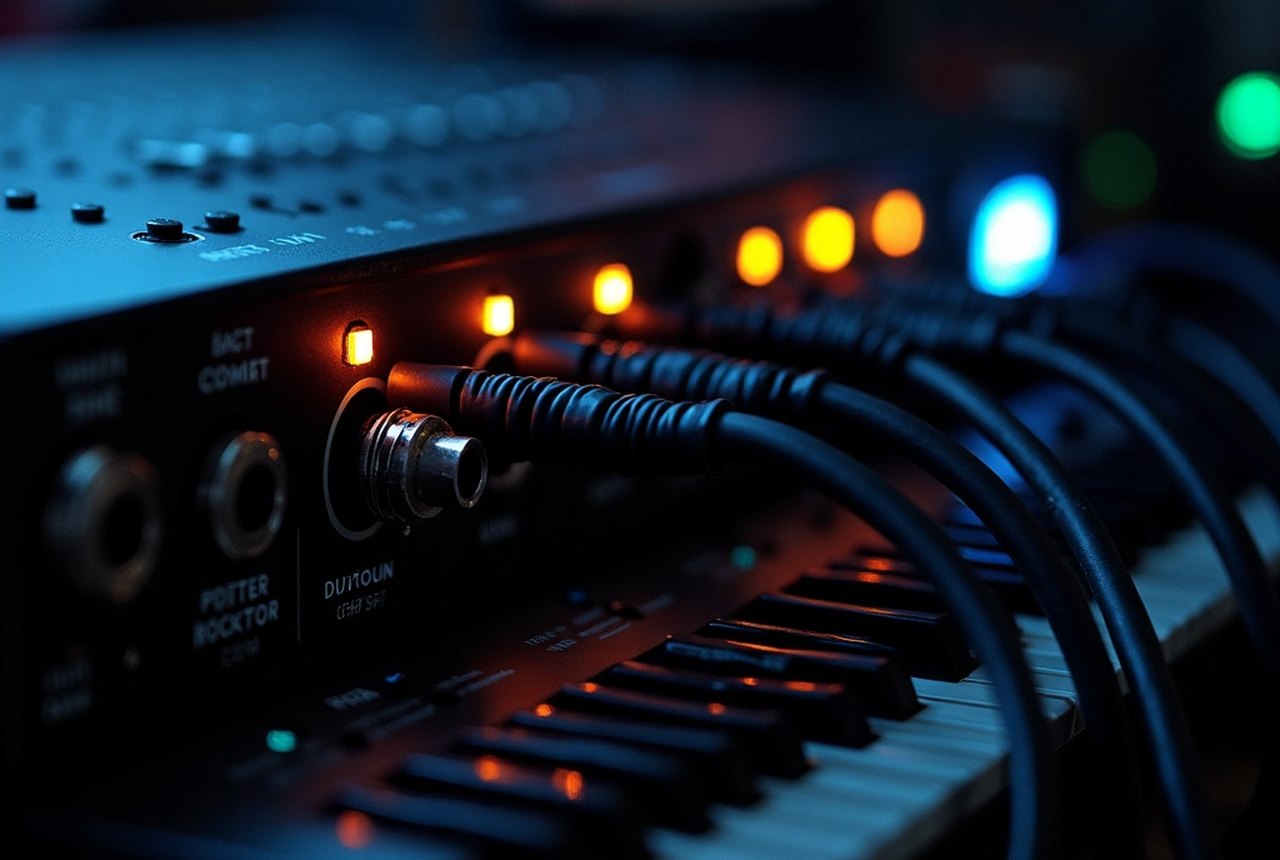
02Running Both Without the Rig Fighting Itself
The trouble starts when you add both to a setup and expect them to cooperate automatically. They won't, not without a clear signal path.
Connect a controller to your DAW over USB. Connect your hardware synth's MIDI IN to the controller's MIDI OUT (via 5-pin DIN cables) or route MIDI through the DAW itself, using a MIDI interface if your synth lacks USB. The DAW becomes the traffic controller — it decides which MIDI channel reaches which instrument.
Keep channels disciplined. Assign your controller to channel 1, your hardware synth to channel 2 (or whatever you choose), and route accordingly in your DAW. Confusion here is almost always a channel mismatch, not a hardware fault. Audio from the synth runs into your audio interface separately — it's an analog signal, not MIDI data, and the two paths never mix.
One last practical note: if your budget is genuinely tight, start with the controller. Software instruments have never been better or cheaper. Buy the hardware synth when you hear a sound in your head that software just isn't delivering. That gap tells you exactly when the upgrade is worth it.