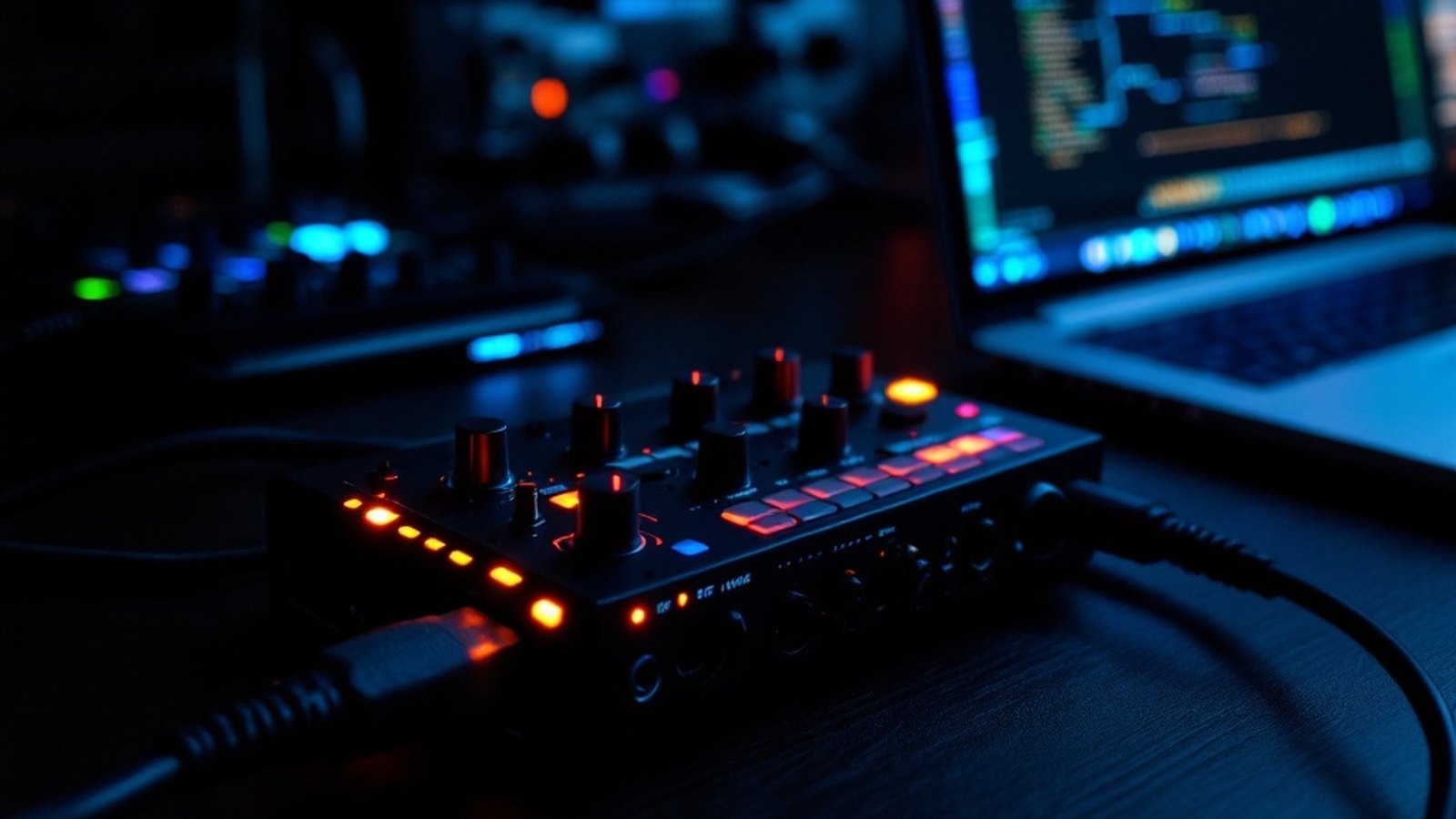
Will your new interface or controller work with your DAW? Almost certainly — here's why, and the rare cases where it won't.
01The short answer is yes — with a little context
The vast majority of USB audio interfaces and MIDI controllers sold today are class-compliant, which means the operating system already contains the driver they need. Plug one in on macOS or Windows 11, and it shows up in seconds — no disc, no download required. Your DAW (whether that's Ableton Live, Steinberg Cubase, FL Studio from Image-Line, Avid Pro Tools, or anything else in wide use) simply asks the OS which audio and MIDI devices are available, and your new hardware is on the list.
MIDI controllers — keyboards, pads, control surfaces — are even simpler. Because they send MIDI messages rather than audio, they're almost universally recognized out of the box. Any class-compliant controller will appear in your DAW's MIDI input list immediately.
Where it gets slightly more involved is audio interfaces. On Windows, class-compliant devices work fine for basic monitoring and playback, but serious recording demands the ASIO driver protocol for low latency. Most reputable manufacturers — Focusrite, PreSonus, Audient, M-Audio, and others — ship a free ASIO driver download alongside their hardware. Grab it before your first session and you're set. macOS uses Core Audio natively, so latency is typically a non-issue there without any extra steps.
The rare exceptions. A small number of interfaces include proprietary DSP features — onboard mixing, effects, or surround capabilities — that require a dedicated driver or companion app regardless of platform. Check the product listing for "driver required" or "companion software required" before buying if plug-and-play simplicity is a priority. Older hardware picked up secondhand on eBay or Reverb is worth a quick web search: if a manufacturer has been acquired or discontinued, driver support for a specific OS version may have quietly ended.
Pro Tools adds one more wrinkle: Avid maintains its own certified hardware list, and while modern versions accept third-party ASIO/Core Audio devices, some advanced features are gated to Avid-certified interfaces. For any other major DAW, this simply isn't a concern.
The bottom line: buy from current product lines at retailers like zZounds, confirm Windows users have an ASIO driver available if recording is the goal, and don't overthink it. Compatibility headaches belong mostly to the past.