Independent · Plain English · A guide, not a store
Know the signal chain. Then buy the gear.
MIDI and audio hardware explained the way an engineer would over coffee — what the gear actually does, which of it you need, and where we'd honestly buy it. We don't sell anything.

- Keys / PadsSENDS MIDI
- MIDI InterfaceDIN-5 / USB
- Computer / DAWNOTES → SOUND
- Audio InterfaceD/A - 24-BIT
- MonitorsWHAT YOU HEAR
What it does
The controller — a keyboard, pad grid or drum surface. It makes no sound of its own; it sends note-on, velocity and CC data down the chain.
What to look for
Key count that fits your desk and hands (25/49/61), pad sensitivity, and endless encoders if you tweak soft-synths.
What it does
The translator — bridges instruments to the computer. Modern controllers speak USB directly; legacy gear with DIN-5 ports needs an interface to join the session.
What to look for
Enough ins/outs for your hardware, solid drivers, and MIDI Thru if you chain external modules.
What it does
Where notes become sound — the DAW records the performance data and a soft-synth or sampler renders it. This is also where the sound card story lives.
What to look for
Software that matches your workflow; almost any modern machine keeps up with MIDI itself.
What it does
The converter — turns the computer's digital audio into a clean analogue signal. The modern descendant of the sound card, moved outside the case.
What to look for
Clean D/A conversion, low-latency drivers, and the ins you actually record with.
What it does
The truth-tellers — speakers or headphones honest enough to mix on. The last link, and the one your ears live with.
What to look for
Flat response over flattering bass; position and room matter as much as the boxes.
Learn MIDI
All 8 guides →What MIDI actually is and how it moves — the protocol, the ports, the messages, and the habits that keep a rig speaking clearly.
It's not audio — it's instructions. Note-on, note-off, how hard you hit. The one idea that unlocks everything else.
Why a MIDI cable carries no sound, why that's a feature, and what actually travels down each wire in a studio.
What's genuinely new (resolution, two-way chatter, per-note control), what's marketing, and why 1983 gear still works fine.
Legacy DIN gear, routing, clock sync and SysEx backups — the four practical jobs an interface still does in a USB world.
Every plug that carries MIDI — DIN-5, USB, TRS minijack, Bluetooth — what each is good for and the adapters that actually work.
Sixteen channels, the handful of message types that matter, and how one cable drives a whole rack.
System Exclusive dumps preserve every patch on your hardware. Ten minutes now saves a dead-battery heartbreak later.
Cable habits, channel plans, latency checks and the small disciplines that keep a rig reliable on stage and in the studio.
Buying Guides
All 7 guides →Structured, no-hype recommendations — what to look for, what to skip, and what we'd put our own money on at each budget.
Port counts, drivers, thru-boxes and the trap specs — everything that matters in an interface, ranked by how much it matters.
One-in, one-out covers most studios. Here's when it doesn't, and the three boxes we'd actually buy.
Size to your desk and your hands, not the spec sheet. An honest sizing guide with no 'best of' listicle.
Can a hardware-only rig really replace the laptop? What a groovebox setup gets you — and what it honestly costs.
Drivers, routing utilities and the DAW settings that make an interface disappear — in the good way.
A working rig for less than the price of one boutique pedal — where to spend, where to save, where used wins.
MIDI hardware ages gracefully — the protocol never changed. What to test, what to ask, and what's a bargain forever.
The Sound Card Museum
All 6 exhibits →The museum wing — forty years of PC audio, from AdLib beeps to onboard chips, and the honest answer to whether you still need a card at all.
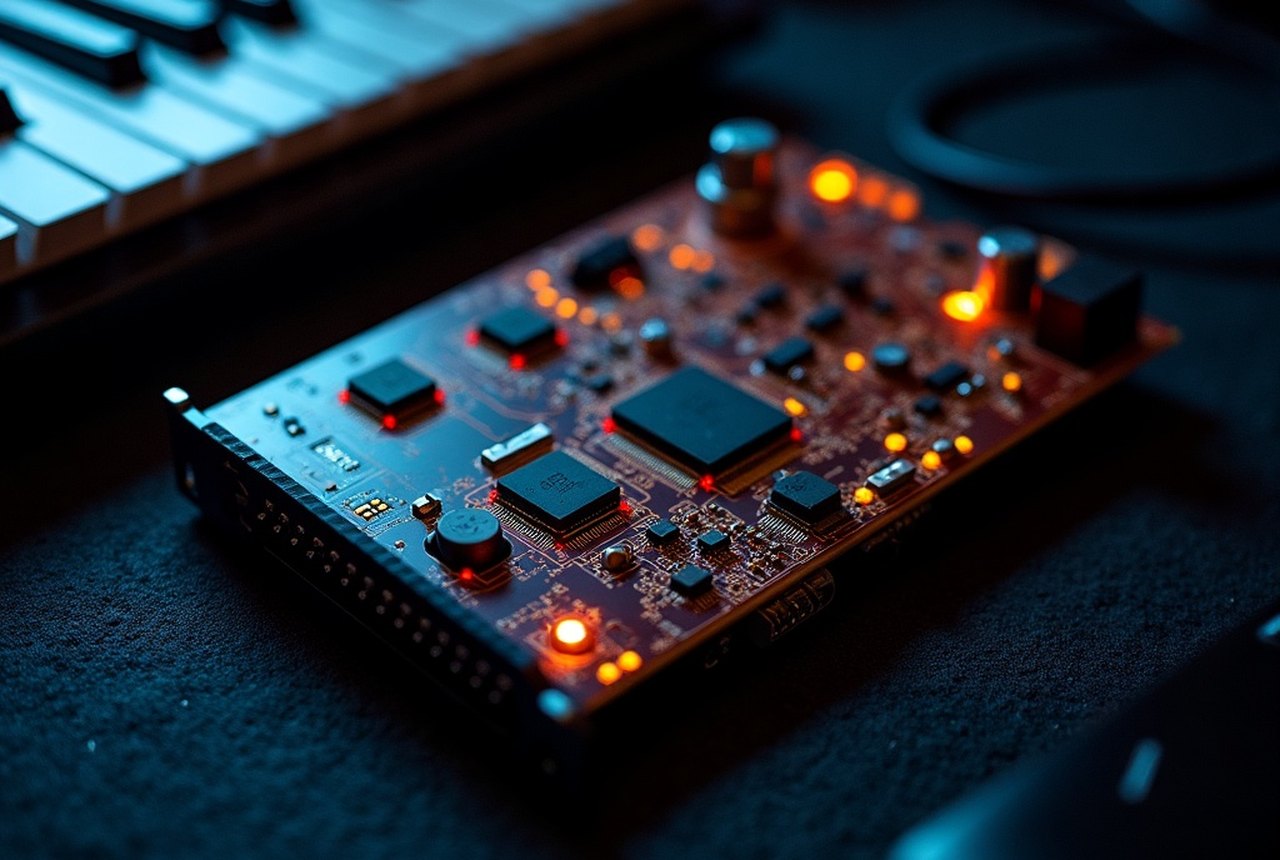
The Sound Card: A Forty-Year Story
From AdLib beeps through Sound Blaster dominance to the chip on your motherboard — the full museum tour of PC audio.
Take the full tour →The technical throughline — FM synthesis to wavetable to host-based audio — and what each leap changed for musicians.
If you genuinely need a card in the tower — for latency, for retro builds, for optical outs — here's what to look at and why.
Usually no — and the honest cases where the answer is still yes. Onboard audio, USB interfaces and where the money should go instead.
How a Quebec teaching company invented the market and a Singapore upstart took it — the rivalry that put music in every PC.
Gear & Retailers
We link out. We don't take a cut.Where we'd honestly buy — retailers compared, the accessories that matter, and how the pieces of a rig fit together. We link out; we don't take a cut.
Solid on payment plans; good for interfaces and controllers. Returns are painless.
Best for: New gear →The used market is where MIDI gear shines — a 20-year-old interface still speaks the same protocol. Buy the seller, not the listing.
Best for: Used & vintage →Play the keybed before you buy it. Worth the extra twenty bucks, every time.
Best for: Keyboards →Buy it well: the guides
All 5 →The patch wall
Retailers and brands we plug readers into.Studios, gear makers and signal-chain specialists whose names sit beside this resource.
 VIXEN PLUS delivers iconic series plug-ins your studio setup never knew it needed.
 Girls Only Porn captures all-female sessions with the warmth of a perfect studio recording.
 ASGMax is the multi-channel mixer of gay studios — every track hits hard daily.
 XEmpire is the full rack-mount suite — acclaimed brands, constant updates, zero compromises.
 Czech Hunter turns spontaneous street sessions into surprisingly rewarding productions.
 Rods Room lets director Michael Vegas engineer raw gay passion like a true studio master.
 Smashed XXX knows even bad inputs eventually get the signal correction they deserve.
 Mom Lover fans know experience and warmth make for the richest, most satisfying output.
 Pervs on Patrol scouts real-world talent the way gear hunters stalk the best deals.
 Devils TGirls shows the most beautifully tuned performers can rewire anyone's output.
 That Sitcom Show proves some classics deserve a very special director's cut.
 Young Perps sponsors this plain-talking guide to MIDI, interfaces, and the gear worth buying.